Teaching Kids to Read Arabic: Stages from Letters to Fluency
A practical guide to teaching kids to read Arabic, from letter sounds to fluent reading with comprehension, plus simple steps for parents in Qatar.
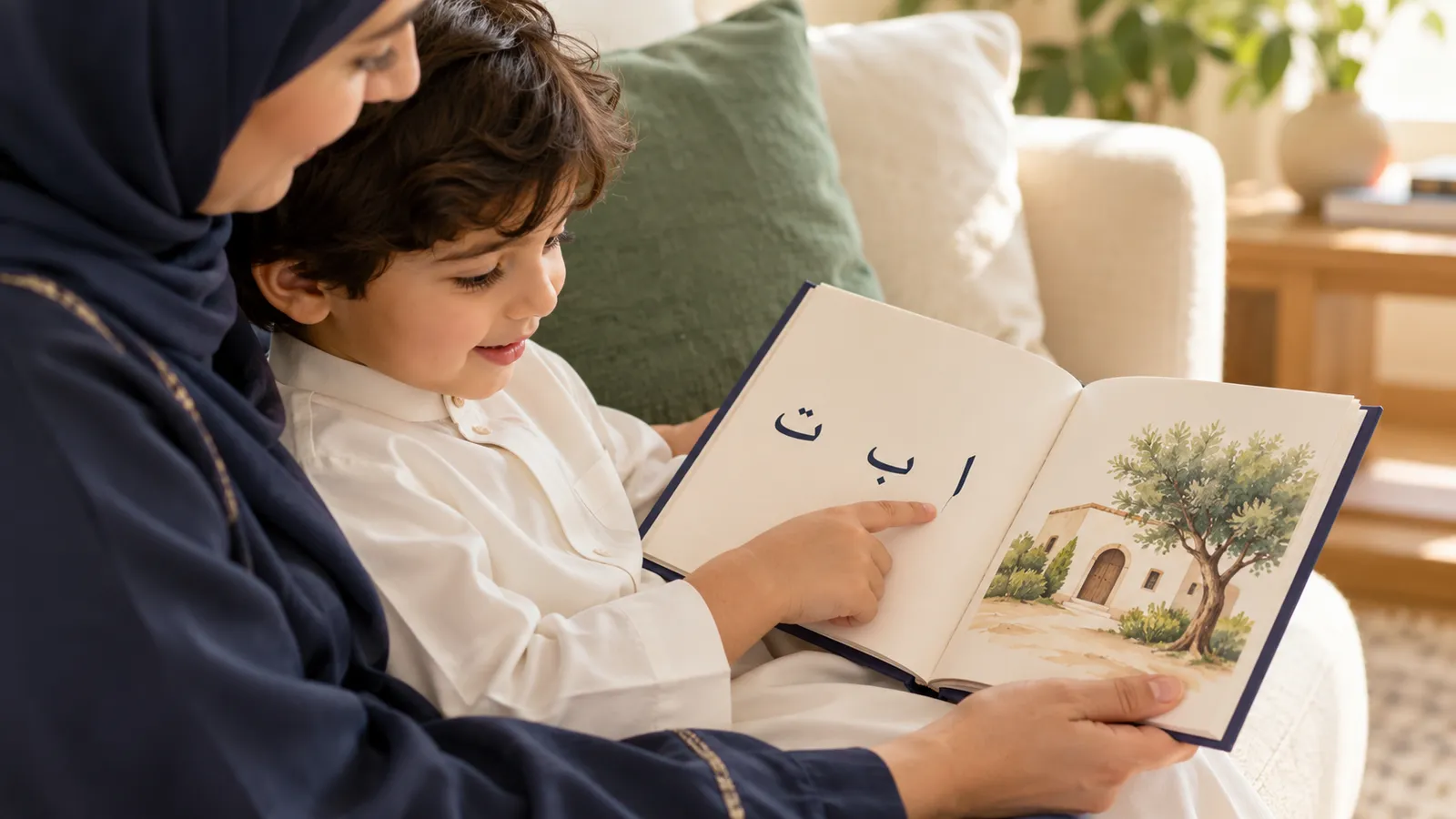
Teaching kids to read Arabic is not a race to memorise the alphabet. It is a journey that starts with the ear before the eye: a child first hears and separates sounds, then links them to letter shapes, and finally blends them into words and sentences they actually understand. Many parents in Qatar worry when a child in Grade 2 still can't read Arabic. Usually the problem is not the child but one stage that was never built properly. This guide walks through the stages in order and shows what you can do at home at each one.
Teaching kids to read Arabic: the four stages
Reading develops in steps, and each step has a clear sign that it has been mastered.
Stage 1: Hearing the sounds
Before a child holds a pencil, they need to hear that the word for "door" begins with the same sound as the word for "house", or that two words share a first sound. Quick oral games such as "say a word that starts with this sound" or clapping the syllables in a long word build this awareness with no books at all.
Stage 2: Letters, sounds and shapes
Arabic letters change shape depending on where they sit in a word, which confuses many young learners. It works better to teach each letter's sound with the three short vowels first, then the long vowels, and to show the letter at the start, middle and end of words. Knowing the name of a letter helps far less than knowing the sound it makes.
Stage 3: Blending and breaking words apart
Next, children combine sounds into syllables and short words, and practise the reverse: splitting a word back into its sounds. Sukun, shadda, tanween and the sun and moon letters come gradually, each with its own practice and familiar everyday words.
Stage 4: Fluency, then comprehension
A child who reads letter by letter spends all their energy decoding and has nothing left for meaning. That is why we reread short texts until they flow, then move on to simple questions: who, where, why, and what do you think happens next?
My child can't read Arabic yet: where do we start?
If your child is struggling, do not start with this year's textbook. Step back and look for the missing link:
- Can they tell apart similar sounds, such as the two "s" sounds or the two "t" sounds?
- Do they know the short and long vowels and pronounce them differently?
- Can they read three-letter words without long, slow spelling?
- Can they understand a short sentence they read themselves and retell it?
The first question they stumble on is usually the right starting point. Try not to compare them with siblings or classmates. A child who feels embarrassed about reading starts avoiding it, and avoidance widens the gap every week.
How parents can help at home
Supporting reading does not take hours. It takes routine and patience. These habits make a visible difference within a few weeks:
- Set aside ten minutes a day for reading aloud, at the same time if possible.
- Read stories to your child that are slightly above their level; listening builds vocabulary and comprehension.
- Have them reread one short text several times during the week until it sounds smooth.
- Ask one question about meaning after reading, not a full quiz.
- Praise effort and progress rather than speed, and correct mistakes calmly by reading the word together.
- Use the world around you: street signs, food packaging and book covers are all small reading opportunities.
If your child is learning Arabic, English and maths at the same time, our article on foundation learning in maths, Arabic and English can help you balance the week across subjects.
Arabic reading foundations at Nova Educational Center
At Nova Educational Center in Umm Salal Mohammed, the Arabic foundations curriculum is built on five consecutive levels that develop reading, writing and comprehension together, so a child only moves up once the previous level is secure. The program is designed for children aged 6 to 10 and includes:
- A level check before the program starts, so your child begins where they actually need to, not where their grade says they should be.
- 12 sessions per program, with the student book and Nova curricula included.
- Progress tracking, with moves between levels based on mastery rather than time.
The final placement combines assessment tools with the teacher's own observation during sessions, because a worksheet alone cannot show how a child reads or how confident they feel. You can see prices on the programs page, including the Integrated Foundation Bundle, which combines Arabic, English and maths at 10% off.
The bottom line
Good reading is built layer by layer: sound, letter, syllable, word, and finally a sentence that makes sense. When a child struggles, the answer is to return patiently to the missing layer, not to push them to keep up with their class book.
If you would like to know where your child stands in Arabic reading and start from the right place, message us on WhatsApp to arrange a level check before the program begins, or visit us at the center in Umm Salal Mohammed.