Foundation Maths, Arabic and English for Kids: When and How
Foundation maths for kids, plus Arabic and English early reading, ages 6 to 10 in Qatar: signs of weak foundations and how to choose a good program.
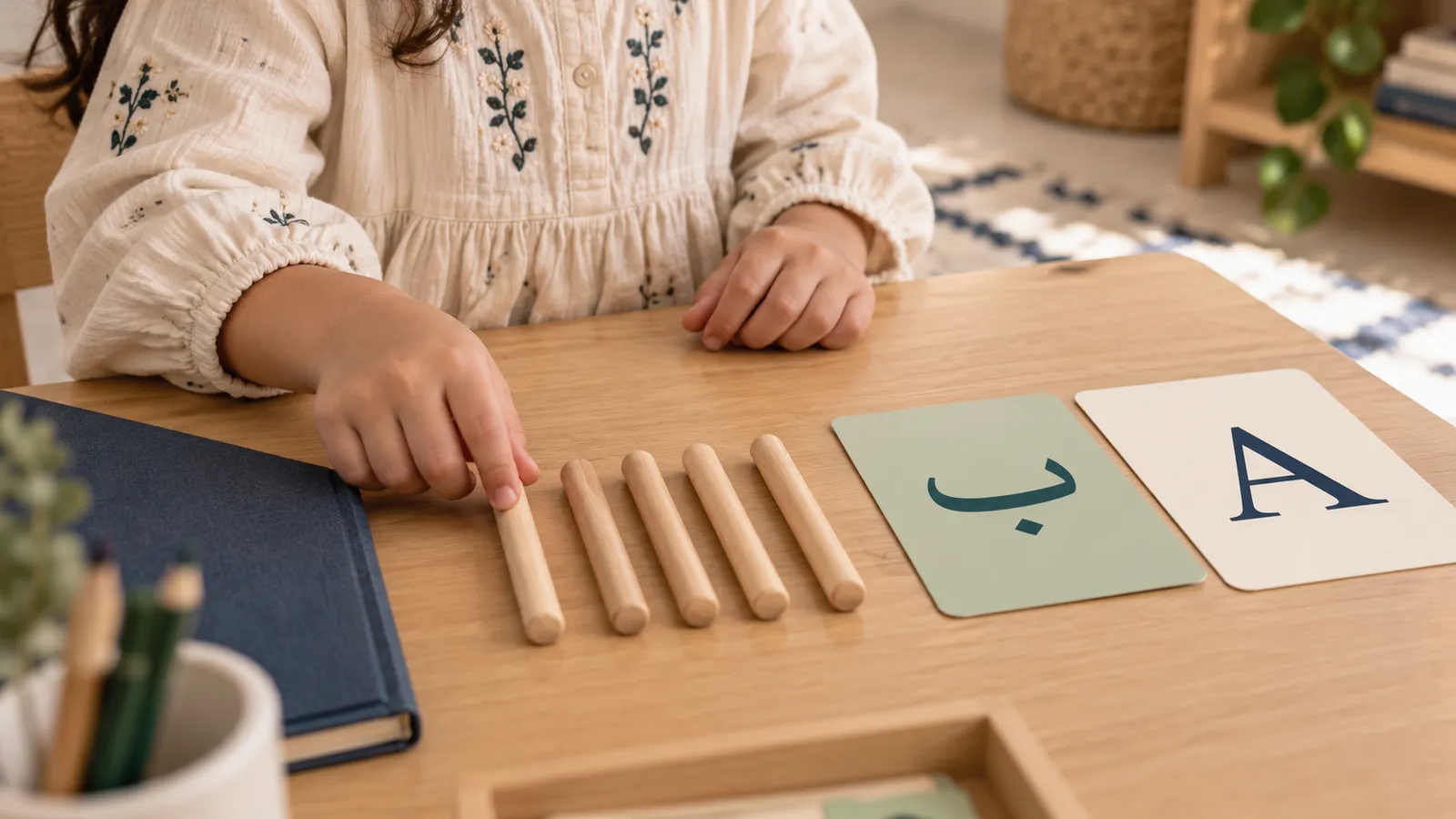
Some parents notice that their child struggles with reading, counts on their fingers for simple sums, or memorises English words without being able to use them. In most cases this is not a question of intelligence; it is a sign that foundations need attention. Foundation maths for kids, together with foundations in Arabic and English between the ages of 6 and 10, is one of the best investments in a child's entire school journey.
In this article we look at the signs of weak foundations, why they matter early, and what a good foundations program looks like.
Signs that a child's foundations are weak
Every child learns at their own pace, and a single sign does not mean there is a problem. But when some of these signs keep appearing, they deserve attention:
In maths
- Difficulty understanding place value (ones, tens and hundreds).
- Always relying on finger counting for simple addition and subtraction.
- Memorising times tables without understanding what they mean, or forgetting them quickly.
- Confusion with word problems even when the operation is easy.
In Arabic
- Mixing up letters that look or sound alike.
- Choppy, letter-by-letter reading beyond the expected stage.
- Difficulty writing simple words they have just heard.
- Reading a text without understanding what it says.
In English
- Not linking a letter to its sound (the basis of phonics).
- Difficulty reading short, simple words.
- Knowing words on their own without being able to build a sentence.
Why early maths and reading foundations matter
Core skills are like the foundations of a house: everything that comes later is built on them. A pupil who did not understand fractions in primary school will struggle with algebra later, and a pupil who reads slowly will find every subject hard, not just Arabic, because understanding the question itself depends on good reading.
Tackling a weakness at a young age is much easier than tackling it later. Children at this stage are more flexible, the gap has not yet widened, and their confidence has not been shaken by repeated setbacks. Waiting means the gap grows each year, and the child may start to associate learning with a feeling of helplessness.
What can parents do at home?
- Read with your child every day, even for ten minutes, and ask what they understood from the story.
- Use maths in daily life: counting items at the shop, working out change and telling the time.
- Praise the effort, not only the correct answer; fear of mistakes stops learning.
- Talk to the class teacher to find out what she notices at school.
These steps support foundations rather than replace them, but they make the effect of a program faster and longer lasting.
What does a good foundations program look like?
Not every program called "foundations" does the job. Here is what to look for:
- It starts by assessing the level, not with the syllabus. There is no point teaching a child what they already know, or skipping what they do not.
- It progresses through clear, sequential levels, and the child moves on once they have mastered the current one.
- It has a curriculum and a book through which parents can see what their child is learning.
- It tracks progress and keeps the family informed regularly.
- It has enough sessions, held regularly, so that a skill becomes a habit.
Foundations at Nova Educational Center
At Nova Educational Center in Umm Salal we offer foundations programs in maths, Arabic and English for children aged 6 to 10, and each program is built on these principles:
- A free level check at the centre before starting.
- 12 sessions in each program.
- The student book and Nova curricula included.
- Progress tracking, with movement between levels based on mastery, not on time passed.
The Arabic foundations curriculum, for example, is built on five sequential levels that develop reading, writing and comprehension, and the child's final placement within them is decided by combining assessment tools with the teacher's observation.
The fee for one program is 900 QAR instead of 1100. For families who want all three subjects together there is the Integrated Foundation Bundle: Arabic, English and maths at 10% off, that is 2430 QAR instead of 2700, for one month, with 12 sessions per program at 3 sessions a week and Nova curricula free of charge. More details are on the Offers page and the Programs page, and you can see the curriculum levels on the Curriculum page.
Start by finding the level
The first step in any successful foundation is knowing where your child stands now. Message us on WhatsApp to arrange a level check for your child at the centre, and let us help you map out the right starting point.